“You’re Fine,” the Doctor Said. So Why Did Tunde Feel Like He Was Disappearing?

His blood test came back normal. His body kept sending the same four messages anyway. Here is what they were — and the one almost every Nigerian man misses.
You know the feeling.
It’s 3pm. You slept last night. Not badly, not well, just slept. You’ve had lunch, you’ve had your second coffee, and there’s a screen full of work you can’t make yourself care about. By the time you’re crawling through Lagos traffic on the way home, there’s nothing left. Not for your wife. Not for your children. Not for the gym you keep promising yourself you’ll return to.
And somewhere between the second red light and your gate, a quiet thought arrives: “Something is wrong with me.”
Then comes the explanation, handed to you by every advert on your phone. Tired? Low drive? Softer mornings? It’s your testosterone. Of course it is. Everybody says so.
That is exactly what a man I’ll call Tunde believed (name and details changed). He was 42. He didn’t see a doctor first. He did what most of us do: he opened Instagram. Three different “testosterone boosters” in eight months, plus the shipping, the re-orders, the two-for-one deals. Over ₦345,000. Nothing changed. Not his energy. Not his mornings. Not his drive.
Finally, almost out of frustration, he did the one thing he should have done at the start: a proper blood test.
His testosterone came back at 480 ng/dL. That is not low. It sits right in the normal range for a man his age. His blood pressure was fine, his weight was fine, and his doctor smiled and said, “You’re fine.”
And that was the worst part. Because Tunde knew he wasn’t fine. Being told you’re fine when you can feel yourself slowly fading is its own kind of lonely.
Here is what makes this story worth your next ten minutes: the doctor wasn’t wrong. Tunde’s testosterone really was normal. He simply hadn’t been asked the right questions. About his mornings. About how long he takes to recover. About his feet.
Yes, his feet.
When I walked him through those questions, he went quiet for a long moment. Then he said: “Nobody has ever told me any of this.”
Now I’m going to walk you through the same four signs. Three of them you’ll recognise in about ten seconds. The fourth is the one almost nobody connects — and it’s the reason I saved this page for you. Keep a quiet count in your head of how many you already have. At the end you’ll check yourself against a short assessment, and I suspect the result will surprise you.
The Three Promised Signs
In the brief you downloaded, I promised you a follow-up chapter that walks through three signs most Nigerian men miss. Here they are — with more detail than I've ever put in writing before.
Sign One
The quiet disappearance of morning erections
Most Nigerian men in their 20s wake up hard almost every morning. It's so common nobody thinks about it.
By their mid-30s, it happens three or four times a week instead of seven.
By their early 40s, it's once or twice. Maybe rarely.
And almost no man notices when it stops.
They assume this is what getting older looks like. They don't mention it to their doctor. They don't mention it to their wife. They don't quite admit it to themselves.
But morning erections — medically called nocturnal penile tumescence — are one of the single most reliable early markers of vascular health a man has. They happen during REM sleep, when the body produces its biggest nightly release of nitric oxide. If they are declining, your nocturnal vascular signalling is declining with them.
You can feel healthy and still be losing this. You can be going to the gym, eating reasonably, having sex fine — and still have your mornings quietly telling a different story.
Sign Two
The stretch of recovery time
Think about your physical recovery five or seven years ago. How long did it take you to bounce back after a hard football game, a heavy gym session, or two days of manual work? A day, maybe two.
How long does it take now?
For most men over 35, the honest answer is three or four days. Sometimes more. Saturday's five-a-side still has you feeling it on Tuesday afternoon.
Men mistake this for "getting older." It isn't — or rather, it isn't only.
Recovery is a circulation function. The faster your blood delivers oxygen and clears waste from muscle, the faster you recover. When recovery time stretches, it usually means the delivery-and-clearance system is slowing down. That is the same system that keeps everything else working.
Sign Three
You're colder than you used to be
Your feet are cold at night. Even in Lagos heat. You reach for a blanket in a bedroom that's still 28 degrees. Your hands feel cold in office air conditioning. Your fingers get chilly in December when they never used to.
Men joke about this. "I've become my father."
It isn't funny. It's a sign.
Your body prioritises circulation to the core organs — heart, brain, kidneys — over the extremities. When the whole system is functioning at full capacity, your hands and feet stay warm because there's plenty to go around. When the system is compromised — even slightly — the extremities are the first place you feel it. Your toes get cold before your heart does.
Read that line again, because it holds the strangest part of this whole story.
Notice what the three signs have in common. None of them hurt. None of them send you to a clinic. Each one is easy to laugh off, explain away, or blame on age. That is exactly why they work so well as warnings — and so badly as alarms.
Which brings us to the one that doesn’t even happen while you’re awake.
The Fourth Sign — The One Nobody Talks About
Those three signs were what I promised in the brief. But there is a fourth one — and I saved it for this chapter because men rarely believe it the first time they hear it.
Here it is: you snore. Or you used to. Or your wife has moved to the other side of the bed because of it.
If you snore loudly — if you wake up gasping, if you feel exhausted even after seven or eight hours, if you have a thick neck above 17 inches and a belly that's grown in the last decade — there is a specific word for what you might have. It's called obstructive sleep apnea. And it may be quietly damaging nearly every part of what you thought was "just getting older."
Here's what happens in men with untreated sleep apnea: your airway collapses dozens of times per night. Every time it collapses, your oxygen drops. Every time your oxygen drops, your body releases stress hormones. Repeated night after night, that pattern is linked to lower nitric oxide and lower testosterone. And your deepest REM sleep — the phase where nocturnal erections happen, and where the body does its most critical repair — gets shredded into pieces you can't recover from in the morning.
The reason nobody talks about it: it happens while you're asleep. You can't feel it. You can't complain about it. You just wake up tired and slowly become a version of yourself you don't recognise.
Seven questions. Two minutes. Each one is about something real your body is already telling you. Answer honestly — not aspirationally.
Your Assessment Score
0/21
—One honest note: this is not a medical diagnosis — it's a reflection tool. If your score is on the higher side, the answer is a blood test and a real conversation with your doctor, not another supplement.
Okay. If you've finished the quiz, you've just given yourself an honest reading. Whatever that number is — green, amber, orange, red — you now know more about your own body than most Nigerian men learn in a lifetime.
I promised you a bonus chapter in the email. I want to be straight: the email promised "three signs." That's what I usually deliver. But you opened this link, you read all four signs, and you completed the assessment. Anybody who does that is serious.
So I'm not going to give you what I promised.
I'm going to give you something else.
The Five Hidden Facts About Men's Health Nobody Sits You Down to Explain
These are the five things I would hand to every man who writes to us convinced his testosterone is gone. Not to sell you anything — just because you read this far, and nobody should have to learn them the way Tunde did. Read slowly. At least two of them will change how you look at your own week.
Fact One
Your blood pressure medication might be quietly sabotaging your erections.
Beta blockers and thiazide diuretics — two of the most-prescribed blood pressure medications in Nigeria — have well-documented links to erectile difficulty. And some research suggests statins can lower CoQ10, a compound your heart muscle uses for energy. This is not a reason to stop your medication. It's a reason to know your medications and to have a conversation with your doctor about which specific ones you're on, at what dose, and whether alternatives exist. Most Nigerian men never ask this question. Ask it.
Fact Two
Your belly fat is running a hormone factory against you.
Visceral fat — the deep fat around your organs, not just the surface belly — contains an enzyme called aromatase. Aromatase converts testosterone into estrogen. The more visceral fat you carry, the more of your own testosterone is being converted into estrogen every single day. This is why belly fat is linked to shrinking confidence, dropping drive, and softening erections even in men whose testosterone blood tests look "normal." The fix is real: reducing visceral fat is one of the fastest and most reliable ways to raise free testosterone — no booster required.
Fact Three
Zinc sits quietly behind testosterone, nitric oxide and sperm quality — and some men run short.
Zinc is involved in making testosterone, supporting nitric oxide, and maintaining healthy sperm. It’s one of the minerals men can fall short on, especially on diets heavy in grains and light in seafood and red meat. Don’t guess. A simple blood test can show where you stand, and a doctor or pharmacist can tell you what dose is right for you — too much zinc over time can cause problems of its own, including low copper. Food first: oysters, red meat, pumpkin seeds, beans and groundnuts are all worth knowing.
Fact Four
The ejaculation-prostate paradox nobody discusses.
Multiple peer-reviewed studies over the last 20 years have found a consistent association between higher ejaculation frequency and lower prostate cancer risk. Men ejaculating 21+ times per month have shown measurably lower risk than men ejaculating 4–7 times per month. The proposed mechanism: ejaculation clears prostatic fluid of accumulated potential carcinogens. What this means in practice: regular sexual activity is protective, not something to avoid. The opposite of what most culturally quiet Nigerian men assume. This isn't a prescription — it's simply a fact. And it's the kind of fact that reframes an entire part of a man's life if he's been treating sex as something to "conserve."
Fact Five
Your 3pm crash isn’t weakness — it’s your body clock, made worse by how you eat and sleep.
Everyone has a natural dip in alertness in the early-to-mid afternoon, and a heavy starchy lunch plus a short night can turn that dip into a crash. Most men answer it with more coffee, which can quietly steal tonight’s sleep and set up tomorrow’s crash. Practically: a lighter lunch with protein and vegetables, a glass of water, two minutes of slow breathing, three minutes of walking, and your last caffeine by early afternoon. A small habit, done daily, can change your afternoons more than another cup of coffee will.
That's it. That's the bonus chapter I never had to write — but you're the right reader for it.
If you'd stopped reading at the third sign, you would have missed all five of those facts. They aren't tricks. They're the honest, hard-to-find connections between what's happening in your body and what you thought was "just getting older."
Now — where to go from here.
Tunde’s next question changed everything. It may be yours too.
When I finished explaining the four signs, Tunde asked the only question that matters:
I gave him the same honest answer I’ll give you, in two parts.
Part one is free, and it’s real. The foundation in the brief — sleep, water, food basics, movement, breathing — plus everything on this page is a genuine starting point. If you do nothing else, do those for 30 days, then re-take the quiz.
Part two is the tonic. And this is where advice stops and something you can actually drink begins.
Most men are told what to avoid. Almost nobody puts something in their hands that they can make in their own kitchen, from ordinary Nigerian market ingredients, designed to give the body what it has been missing. No imported powders. No bottle with a mystery label. A real tonic, prepared by your own hands, in minutes.
That is The EOD Tonic Guide.
It is built on one simple idea: your body was made to work. Strong circulation. Deep sleep. Mornings that wake you up before the alarm does. Somewhere along the way — the stress, the long hours, the short nights, years of the wrong food — the system drifted off course. These tonics are designed to help reset it: to give your body the raw material it needs to function the way it was made to.
Think about what that means. Not a patch. Not a stimulant that fades by evening. A daily ritual that works with your body. The aim is simple: to help you feel like yourself again — like turning back the hands of time on the man you used to be.
And you don’t have to figure it out alone. Inside the guide you’ll find twelve tonics to prepare at home, a 14-day plan for the food around them, the afternoon drinks, the sleep changes and the routines. One clear path, from the first tonic you make to the habits that keep you there.
Inside The Complete Library — All 7 Guides

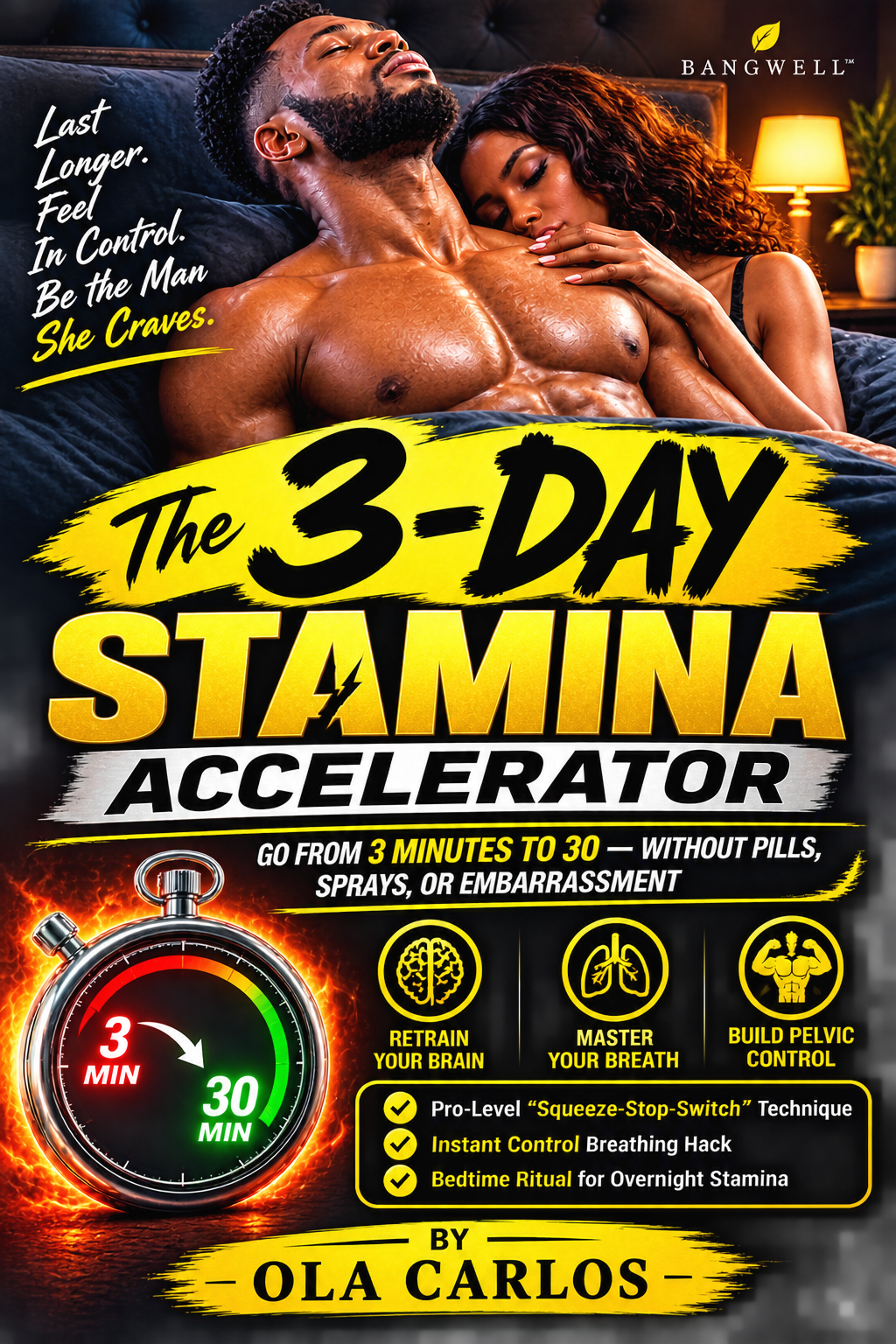


- ✓The Complete 12-Tonic Master Guide — twelve tonics you prepare at home from ordinary Nigerian market ingredients, each built around one purpose: supporting your circulation, your drive and your energy. This is the heart of the system.
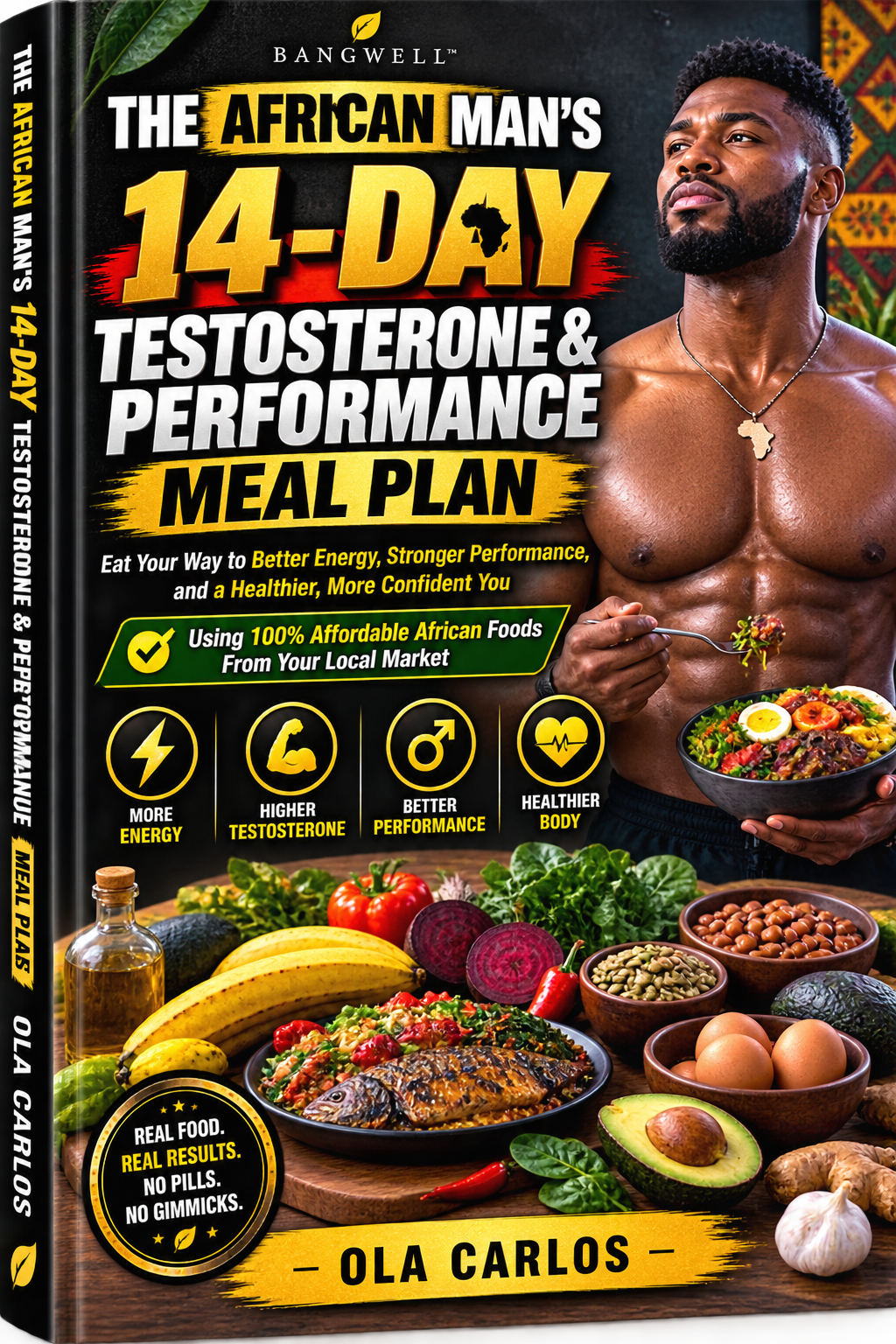
- ✓The 14-Day Performance Meal Plan — familiar foods arranged day by day, so you stop guessing what to cook.
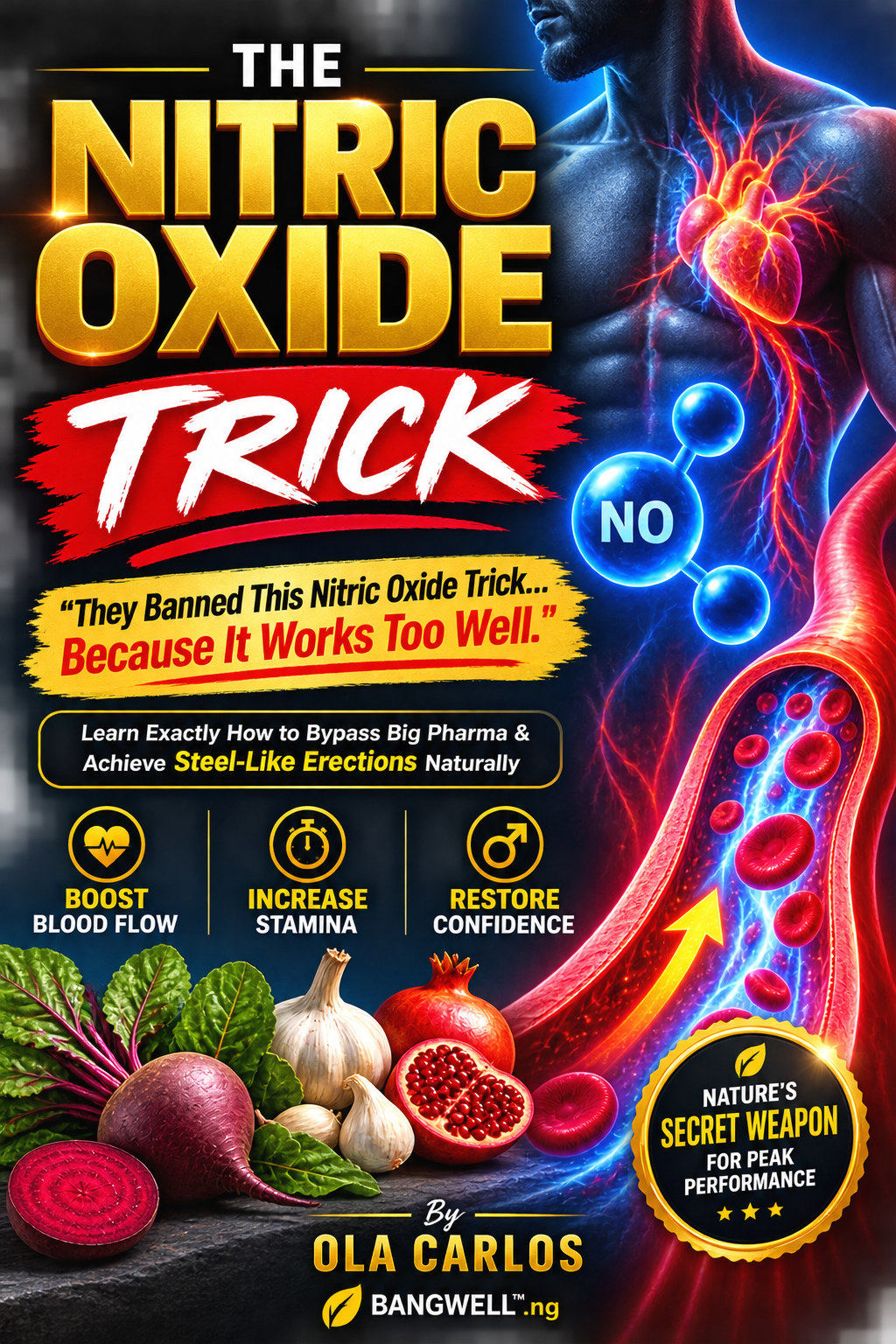
- ✓The Nitric Oxide Trick — a simple food-based preparation built to support healthy blood flow. Most men are surprised how ordinary the ingredients are.
- ✓The 3-Day Stamina Accelerator — breathing, pacing and pelvic-floor routines that teach control.
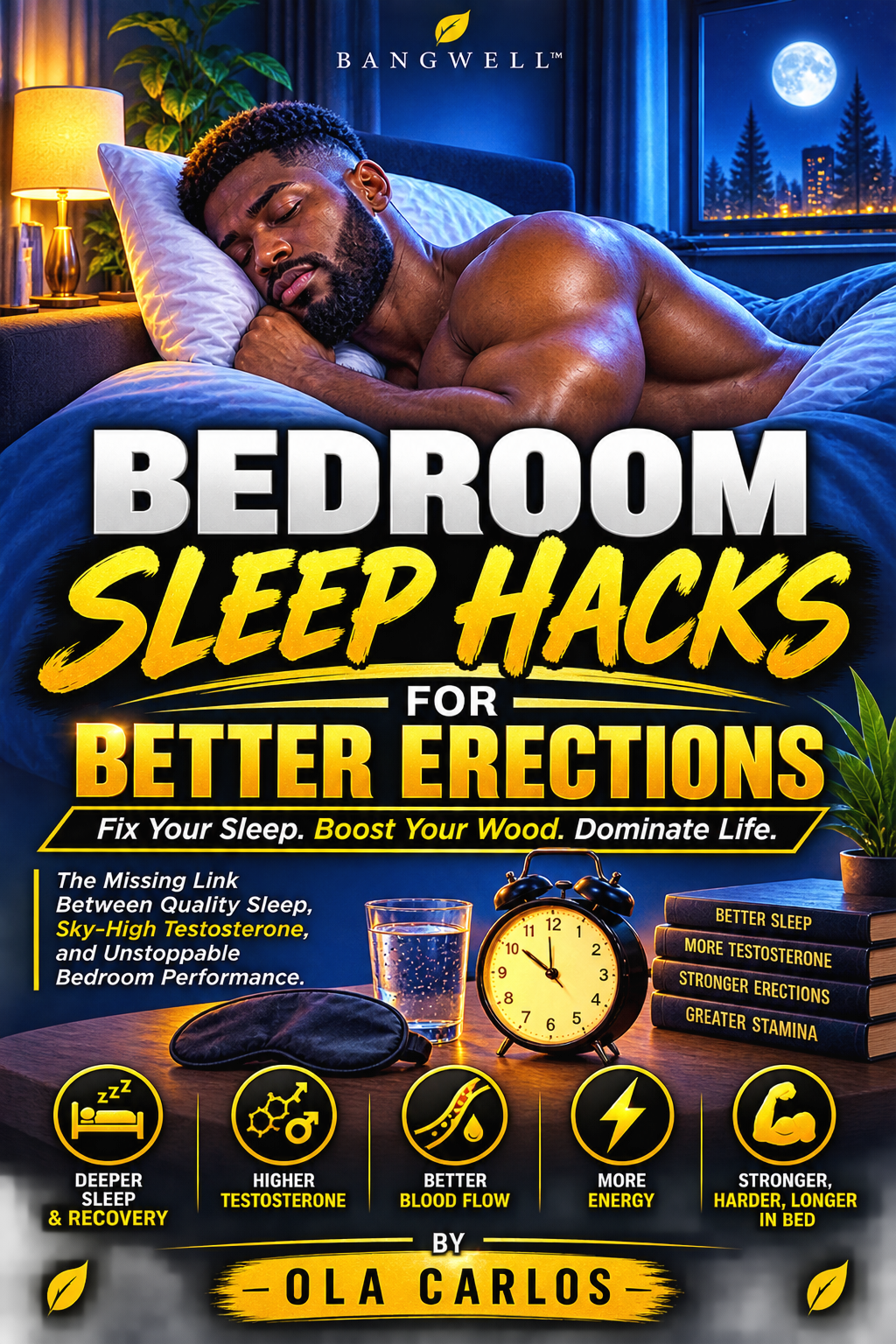
- ✓Bedroom Sleep Hacks — five changes to your sleep space that support the deep sleep your body repairs itself in.
- ✓Five Savage Smoothies — afternoon reload drinks for the exact hour your energy usually falls.
- ✓The Estrogen Flush Companion — a 14-day routine to reduce everyday exposures that can interfere with male hormones.
Seven guides, one mission: to help your body get back to working the way it was made to. The tonics are the engine. The meal plan, the sleep changes, the smoothies and the routines are the road they run on — built so that a man with a busy week and a Lagos commute can actually follow it.
Do the maths Tunde never did
This is for you if you’ve scored amber, orange or red; if you’re tired of buying bottles that do nothing; and if you’re willing to follow a clear plan for a few weeks.
This is not for you if you want an overnight miracle, or if you have chest pain, fainting or any symptom that worries you — in that case, see a doctor first. The tonic is designed to support your body. It does not replace medical care.
I could put a fake countdown timer here. I won’t. Here is the real reason not to put this off: you already know your score. Every month you spend “thinking about it” is another month of the same 3pm, the same mornings, and the same quiet question on the drive home.
Here is exactly how the price works. ₦12,500 is yours for 5 days from the day you joined the Bangwell Letter. After that it moves to ₦19,999, and later to a higher final price. That is the whole story — no gimmicks. Decide based on that, and on the 60-day guarantee, not on pressure.
One-time payment · No subscription · 60-day guarantee
Get The EOD Tonic Guide →If it doesn’t work for you, ask for a refund within 60 days. No story required.
Will this interfere with my medication?
Never stop or change a prescription on your own. The guides flag common interactions, but if you take medication for blood pressure, heart conditions, diabetes or blood thinning, speak to your doctor before changing anything.
Is this a pill or supplement I have to keep buying?
No. It’s a guide to tonics you prepare yourself at home, plus the meal plan and routines around them. You pay once.
What if I’m not good in the kitchen?
Every tonic is laid out step by step, using ingredients from a normal Nigerian market. No chef skills required.
What if it doesn’t work for me?
Ask for a refund within 60 days. No story required.
And if you’re not ready — genuinely not ready, not just “not today” — that’s fine too. Take the foundation habits. Do them for 30 days. Re-take the quiz. See what your score does. The foundation is not a marketing trick. It’s the thing that makes everything else work.
Either way — pay attention to the four signs. They know what’s happening before you do.
Brother,
Somewhere right now, a man is sitting in traffic with the same quiet thought Tunde had: “Something is wrong with me.”
Nothing is wrong with you. Something is simply being missed — your mornings, your recovery, your cold feet, your nights. Now you can read all four.
From here you have two roads. On the first, you close this page, carry on, and hope the signs stay quiet. On the second, you start the foundation today and let the EOD Tonic Guide put a real, homemade tonic in your hands, so you stop guessing and stop paying for bottles that don’t work.
Either way, the next time you catch yourself on that drive home, you’ll know exactly what your body has been trying to say. The only question left is what you do with it.
Yes — I Want The EOD Tonic Guide →— Ola CarlosBangwell.ng · Lagos, Nigeria
P.S. Tunde spent ₦345,000 learning what doesn’t work. The EOD Tonic Guide is ₦12,500 and backed for 60 days. Your body has been talking for years. The only question is whether you keep ignoring it.
End of chapter
Where to go from here
Two quiet doors — no pressure on either. Pick what fits where your head is at today.